Amir Perry · 20 October 2026
Sensor Integration Challenges in Equipping Commercial Ships with Defensive Weaponry Platforms
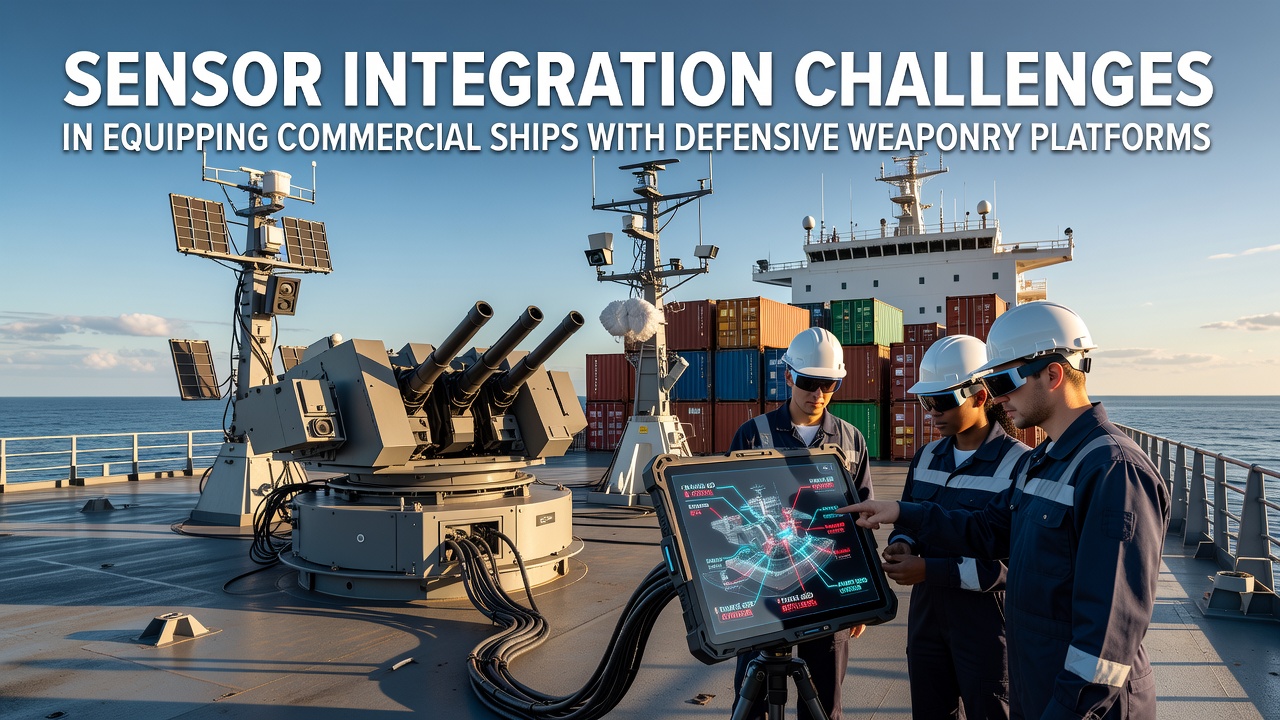
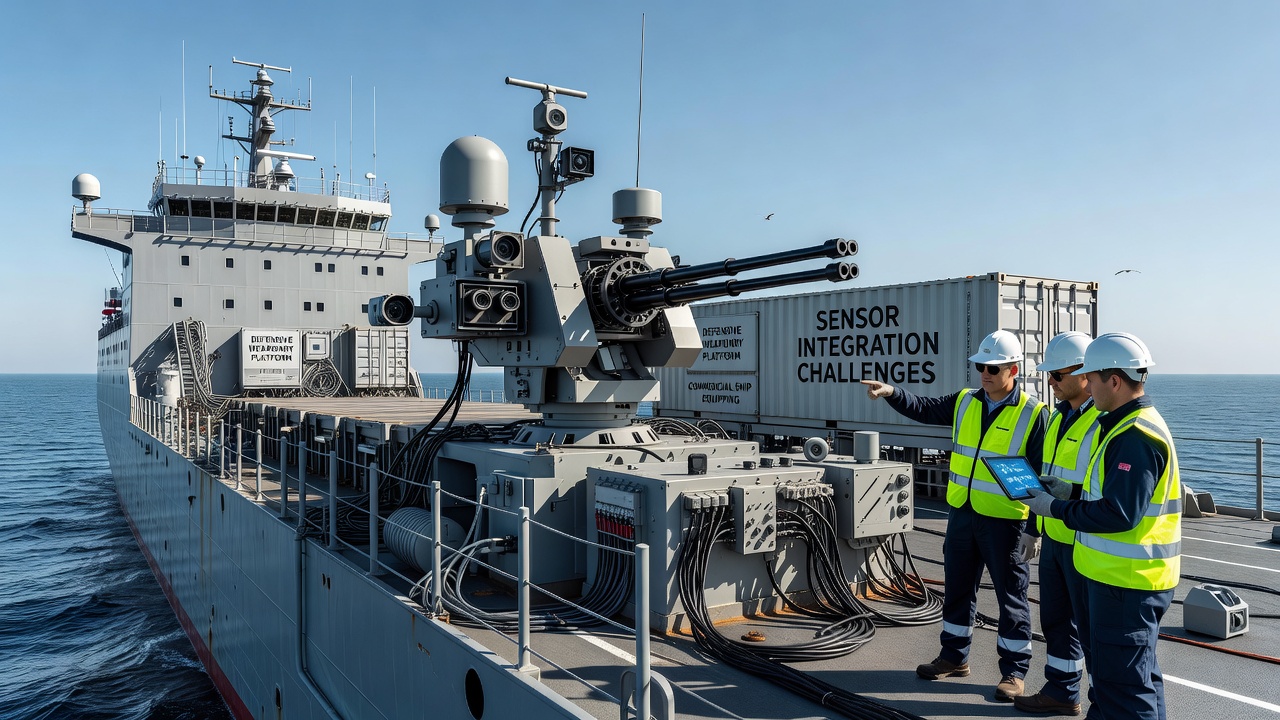
Sensor integration on commercial vessels presents multiple technical hurdles when crews attempt to add defensive weaponry platforms alongside existing navigation and monitoring equipment. These systems must process data from radar, infrared cameras, acoustic sensors, and laser rangefinders while maintaining compatibility with ship-wide networks that already handle collision avoidance and cargo tracking. Observers note that electromagnetic interference often arises because high-power transmitters on weapons platforms can disrupt nearby radar returns or GPS signals, and engineers must isolate cabling routes and apply shielding to prevent signal overlap.
Technical Compatibility and Data Fusion Issues
Multiple sensor types generate streams that require real-time fusion into a single operational picture, yet legacy bridge systems on many bulk carriers and container ships run older protocols that do not align with newer fire-control processors. Research from maritime engineering groups shows that latency spikes occur when data packets from thermal imagers compete with automatic identification system updates for bandwidth, and crews report that recalibration becomes necessary after each major software patch. Those who have studied retrofit projects find that proprietary interfaces on certain defensive mounts demand custom middleware, which increases both installation time and the risk of firmware conflicts during extended voyages.
Power distribution adds another layer because sensor suites and weapon actuators draw from the same generators that supply propulsion controls and refrigeration units. Voltage fluctuations during heavy weather can cause sensor drift, and technicians must install dedicated uninterruptible supplies plus surge protection to keep readings stable. Data indicates that vessels operating in high-latitude routes experience additional magnetic interference that affects compass-linked sensors, prompting teh addition of flux-gate compensators and periodic alignment checks.
Environmental and Operational Factors
Sea state and weather impose continuous stress on mounting hardware and optical windows. Salt spray corrodes connectors, while vibration from main engines and wave impacts can misalign precision sensors within weeks if dampening mounts are not properly specified. Studies conducted by classification societies reveal that thermal expansion differences between steel decks and composite sensor housings create micro-fractures in seals, allowing moisture ingress that degrades infrared detector performance over time. In October 2026, updated guidelines from the International Maritime Organization are scheduled to require enhanced environmental testing protocols for any new sensor-weapon combinations on vessels above 10,000 gross tons.
Wind and spray also affect acoustic sensors used for underwater threat detection, and operators must filter out self-noise generated by the ship’s own machinery. Those who have examined trial data from European shipyards note that false positive rates climb sharply when rain clutter combines with biological echoes from fish schools or marine mammals, requiring refined algorithms that adapt to seasonal migration patterns.
Regulatory and Cybersecurity Considerations
National and international rules govern the placement and use of defensive sensors on commercial hulls, and compliance documentation often demands extensive testing records before a vessel receives clearance to enter certain ports. Authorities in Canada and Australia have introduced separate verification frameworks that examine data security measures, because networked sensors can become entry points for external interference if encryption standards fall short. Figures from industry reports show that crews must maintain audit logs of sensor calibration events and software versions, yet many smaller operators lack dedicated IT staff to manage these requirements alongside routine maintenance schedules.
Cybersecurity reviews further complicate integration because defensive platforms connect to the same satellite links used for cargo manifests and crew communications. Researchers at technical universities have documented instances where unauthorized access attempts targeted weapon control interfaces through poorly segmented network segments, leading to recommendations for air-gapped control units and multi-factor authentication on every maintenance terminal.
Conclusion
Integration of sensors with defensive weaponry platforms on commercial ships continues to require careful coordination across electrical, mechanical, and regulatory domains. Data from ongoing trials and classification society records demonstrate that solutions emerge when teams address interference, environmental durability, and compliance requirements in parallel rather than sequentially. As new standards take effect in late 2026, ship operators and equipment suppliers will need to refine testing procedures and documentation practices to keep pace with both technological capabilities and oversight expectations.