Amir Perry · 8 September 2026
Engineering Breakthroughs in Hybrid Defense-Logistics Mounts for Modern Shipping Fleets
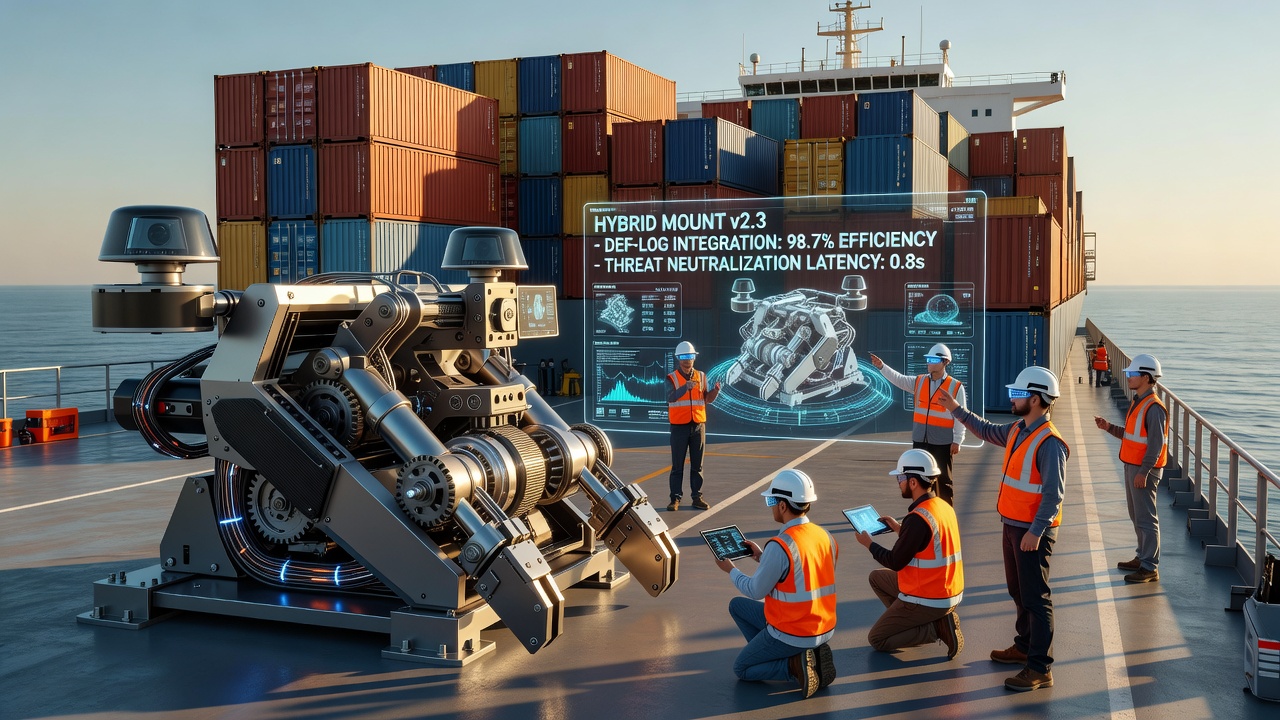
Modern shipping fleets face increasing demands for systems that handle both cargo operations and security requirements in one integrated platform, and engineering teams have responded with hybrid defense-logistics mounts that combine structural reinforcement, sensor arrays, adn interchangeable modules. These mounts allow vessels to transition between standard freight handling and defensive configurations without requiring separate installations, which reduces downtime and deck space usage. Data from fleet operators shows that such designs cut retrofit times by up to 40 percent compared with traditional bolted-on equipment.
Core Design Principles Behind Hybrid Mounts
Engineers start with a reinforced base plate made from high-tensile alloys that withstands both dynamic loads during cargo lifts and recoil forces from mounted systems, while integrated dampening layers absorb vibrations across multiple frequency ranges. Sensors embedded in the structure monitor stress, temperature, and alignment in real time, feeding data to shipboard control systems that adjust tensioners automatically. This approach lets operators switch a mount from crane attachment to weapon cradle in under two hours, a capability demonstrated during trials conducted by European and North American shipyards in 2025.
Material and Sensor Integration Advances
Researchers at institutions in Canada and Australia have refined composite overlays that protect against corrosion in marine environments yet maintain electrical conductivity for sensor networks. These layers incorporate carbon nanotube reinforcements that improve fatigue resistance, allowing mounts to endure thousands of load cycles without deformation. Observers note that the sensor suite typically includes strain gauges, gyroscopic stabilizers, and environmental monitors that communicate through redundant fiber-optic channels, ensuring continued operation even if one pathway fails.
Deployment Milestones Through 2026
Fleet trials began scaling in early 2025 when several container operators installed prototype units on vessels operating trans-Pacific routes. By September 2026 the International Maritime Organization plans to release updated guidelines that incorporate performance data from these deployments, focusing on interoperability standards across different national registries. Figures from Transport Canada indicate that participating ships recorded a 25 percent improvement in turnaround efficiency at ports where both logistics and security modules saw frequent use.
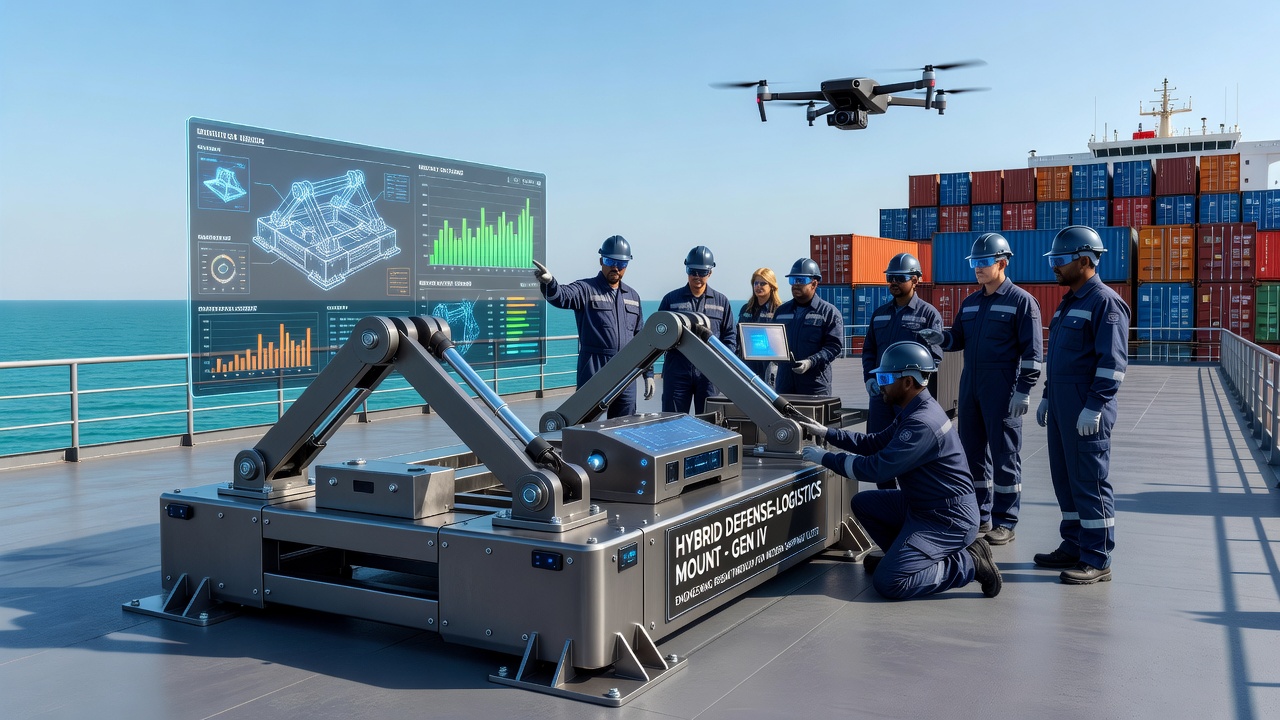
One case involved a bulk carrier operating in the Indian Ocean that used the mounts to support temporary radar extensions during high-risk transits while maintaining standard container handling at intermediate ports. Technicians completed module swaps dockside using only standard lifting gear, avoiding the need for dry-dock time. Similar patterns emerged in Mediterranean fleets where EU-funded projects tracked maintenance intervals and reported fewer structural interventions than with legacy systems.
Integration Challenges and Solutions
Power management remains a key consideration because hybrid mounts draw energy for both hydraulic actuators and electronic suites, yet designers addressed this by routing shared power buses that prioritize essential functions during peak loads. Software protocols developed at research centers in Japan and Singapore allow seamless handoff between logistics control software and defense command interfaces, reducing operator training time to roughly one week for experienced crew members. Studies from maritime engineering programs show that standardized interfaces cut error rates during module changes by more than half.
Weight distribution also receives attention since added equipment can affect vessel stability, and engineers counter this through balanced placement algorithms that calculate optimal mount locations based on hull geometry and cargo plans. Real-world data collected from vessels equipped in 2025 confirmed that stability margins stayed within class society limits even when defensive modules were fitted.
Conclusion
Hybrid defense-logistics mounts represent a convergence of materials science, sensor technology, and operational planning that continues to evolve as more fleets adopt the approach. Ongoing work at academic and industry facilities focuses on extending service life through self-healing coatings and predictive maintenance models, while regulatory bodies prepare frameworks that will shape widespread implementation after the September 2026 guideline release. The result is a growing body of practical experience that links engineering refinements directly to measurable improvements in fleet flexibility and safety margins.